Luma beauty guide
How to Reduce Puffy Eyes: Cold Compresses and Other Quick Fixes


How do you reduce puffy eyes fast? Use a cold compress. Soak a clean washcloth in cool water, sit up, and hold it gently under and around your eyes for a few minutes. Chilled spoons or a wrapped ice pack work too. Cold narrows blood vessels so swelling goes down, and most puffiness usually fades within a day.
Below: how to use a cold compress step by step, what to use if you don't have a washcloth handy, the everyday habits that make puffiness less likely, and the signs that mean it's time to see a doctor instead.
How do you use a cold compress for puffy eyes?
The Mayo Clinic and the American Academy of Ophthalmology (AAO) describe the same simple method:
- Start clean. Wash your hands and use a clean washcloth.
- Wet it with cool water and wring it out so it isn't dripping.
- Sit upright. Both sources suggest sitting up while you do this.
- Hold it under and around your eyes for a few minutes, with light pressure. The AAO says to keep the pressure very gentle.
- Re-wet the cloth when it warms up, then pat your skin dry when you're done.
That's it. You don't need anything fancy, and a few minutes is enough.
What can you use as a cold compress?
Anything cold and clean works, as long as there's a layer between ice and your skin.
| Option | How to use it |
|---|---|
| Cool, damp washcloth | The simplest choice. Hold it over the eye area for a few minutes and re-wet it as it warms. |
| Chilled spoons | Keep two metal spoons in the fridge, then rest the backs over your closed eyes for a few minutes. |
| Ice pack or frozen vegetables | Always wrap them in a towel or cloth first. Never put ice straight on your skin. |
| Chilled tea bags | Steep, cool in the fridge, then rest them on closed eyes. Caffeinated black tea adds a little caffeine. |
| Cold cucumber slices | Chill them first, then rest them on closed eyes. |
The cloth matters with ice. The AAO says wrapping ice or frozen vegetables in cloth protects your skin from freezing. And skip the old movie trick of putting a raw steak on your eye: the AAO says there's no scientific basis for it, and bacteria in raw meat carry a high risk of infection.
Why does a cold compress help puffy eyes?
Puffiness happens when fluid builds up in the thin layers of tissue around your eyes and eyelids (Cleveland Clinic). Cold helps because it narrows blood vessels. In Cleveland Clinic's words, "The cold will help restrict blood vessels and reduce swelling."
Johns Hopkins Medicine explains it the same way: cold reduces blood flow to the area, which lessens swelling. It also notes that quick fixes like this reduce swelling until it goes down on its own over the day. So think of a compress as a head start, not a lasting change.
Should you use a warm or cold compress on swollen eyes?
For everyday puffiness, use cold. The AAO also suggests cool compresses to ease the discomfort of pink eye.
Warm compresses are for a different problem. The AAO recommends a warm washcloth for a stye, which is a tender red bump at the edge of the eyelid. If you're not sure why your eye is swollen, or one eyelid has a sore bump, check with a doctor before you reach for either.
What causes puffy eyes in the morning?
Fluid can build up around your eyes while you sleep, which is why puffiness is often worst when you wake up. A few things make it more likely:
- Salt. Salt makes your body hold on to water, which can show up as puffy eyes (Cleveland Clinic).
- Short sleep. A late night can leave you with puffy eyes the next morning (Cleveland Clinic).
- Allergies. The AAO lists feather pillows, pets on the bed and products you put on before sleep as possible triggers.
- Smoking. Cleveland Clinic notes it can lead to collagen loss and thinner skin around the eyes.
- Age and family history. These cause eye bags rather than day-to-day puffiness (more on that below).
Johns Hopkins also mentions medical conditions, such as thyroid problems, as a possible cause (Johns Hopkins Medicine). That's one more reason to get swelling that won't settle checked.
How can you keep puffy eyes from coming back?
The Mayo Clinic, the AAO and Cleveland Clinic agree on the same everyday habits:
- Drink less right before bed, and limit salty food.
- Sleep seven to nine hours a night.
- Raise your head slightly with an extra pillow, so fluid is less likely to collect around your eyes.
- Keep allergies in check. Cleveland Clinic says antihistamine eye drops only help if allergies are the cause.
- Don't rub your eyes. The AAO lists heavy eyelid rubbing as a habit to avoid.
- Take out contact lenses if your eyes or eyelids swell (Cleveland Clinic).
If you suspect a product, Cleveland Clinic suggests stopping your eye makeup and eye creams for a couple of weeks to see whether the swelling improves.
What should you avoid putting on puffy eyes?
Skip hemorrhoid cream. It's a social media trend, but Cleveland Clinic dermatology resident Angela Wei, MD, doesn't recommend it around the eyes. She explains that hydrocortisone used for long periods can thin or discolor the skin, and that it can irritate or damage your eye if it gets in. Johns Hopkins also urges caution with these creams.
The same goes for steroid eye drops: use them only if a doctor prescribed them for you. Cleveland Clinic ophthalmologist Annapurna Singh, MD, warns that if they're used for the wrong condition, "it could actually harm and blind you."
Is it puffy eyes or eye bags?
Puffiness comes and goes. It's often worse in the morning or after a salty meal, and it usually settles during the day. Bags that are there every day, even after a good night's sleep, are more likely from aging: the tissue that supports the eyelids weakens, and fat can move into the lower lids (Mayo Clinic). A compress won't change those. Our guide to the best eye cream for under-eye bags explains the difference and what a cream can and can't do.
When should you see a doctor about puffy eyes?
See an eye doctor if the swelling lasts more than a day or two. "Any swelling that lasts longer than 24 to 48 hours should send you to an eye care professional because there are times it can be something severe that can blind you," says Dr. Singh (Cleveland Clinic).
Also get checked if the swelling is painful, itchy or red, or if you notice blurry or double vision, floaters, eye pain or a feeling that something is stuck in your eye (AAO; AAO home remedies).
Where does Luma Lift fit?
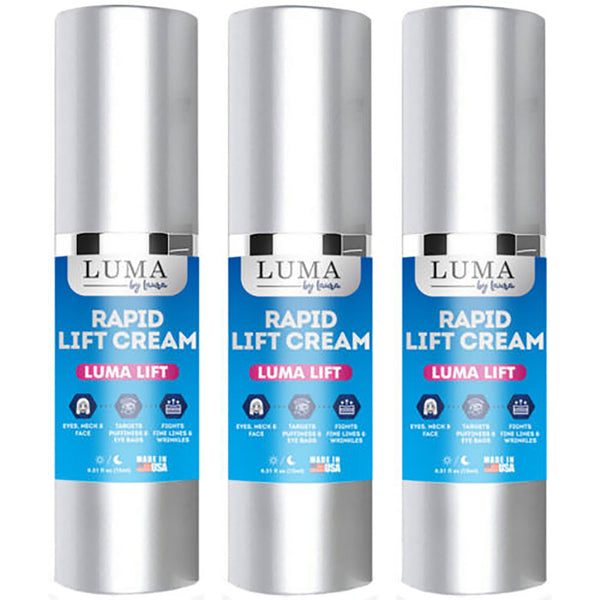
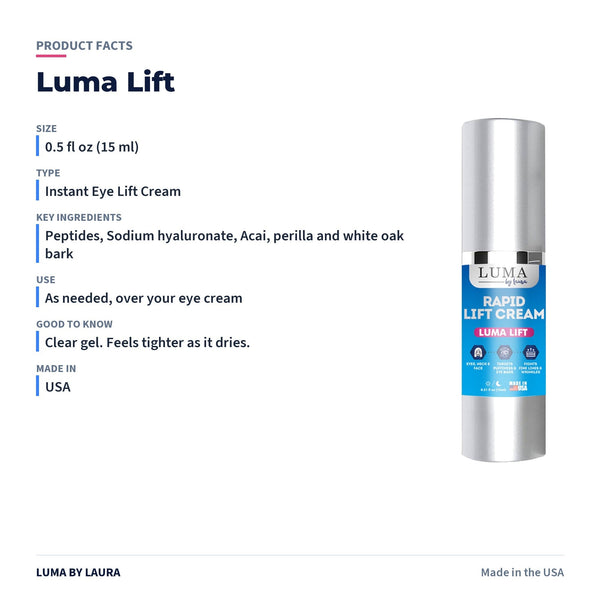
A cold compress takes care of the swelling. Luma Lift instant eye lift cream is what you can put on afterward for the look of the eye area. Pat your skin dry, apply your usual eye cream or moisturizer, then tap a very small amount of Luma Lift on top with your ring finger. As it dries, it gives a temporary tightening feel that helps smooth the look of fine lines and puffiness.
Its listed key ingredients include sodium hyaluronate for hydration, three peptides and white oak bark, acai and perilla extracts. Caffeine isn't one of them.
It's a cosmetic, so it works on how the area looks, and the effect is temporary. Results vary. Do a patch test first (our tips for trying new skin care products walk you through it), keep it out of your eyes, and skip eye products when the skin around your eyes is inflamed or you have an eye infection, as the FDA advises. Our step-by-step guide shows how to apply Luma Lift, and the rest of our eye care range is here.
FAQ
Does cold reduce puffy eyes?
Yes, for a while. Cold narrows blood vessels and reduces blood flow to the area, which helps swelling go down. Cleveland Clinic and Johns Hopkins Medicine both recommend a cool compress for puffy eyes.
How long should you leave a cold compress on puffy eyes?
A few minutes is enough. The Mayo Clinic and the AAO both suggest holding a cool, damp washcloth under and around your eyes for a few minutes, with gentle pressure, while you sit up.
What is the best cold compress for puffy eyes?
A clean washcloth soaked in cool water is the simplest and gentlest. Chilled spoons, chilled tea bags or an ice pack wrapped in a towel also work. Pick whatever is clean and cold, and wrap anything frozen in a cloth.
Do cold spoons work for puffy eyes?
They can. Johns Hopkins Medicine and Cleveland Clinic both list refrigerated spoons as a cold compress. Rest the backs of the spoons over your closed eyes for a few minutes.
Can you put ice directly on your eyes?
No. Wrap ice or frozen vegetables in a towel or cloth first. The AAO says the cloth protects your skin from freezing.
How do you depuff your eyes quickly in the morning?
Use a cool compress for a few minutes while sitting up, then pat dry. To make mornings easier, cut back on salt and drinks before bed, sleep seven to nine hours and add an extra pillow.
Luma by Laura makes and sells Luma Lift, the eye cream mentioned in this article.
Sources: Cleveland Clinic, "Dark Circles or Bags Under Your Eyes? How To Get Rid of Them"; Johns Hopkins Medicine, "How to Get Rid of Bags Under Your Eyes"; American Academy of Ophthalmology, "Home Remedies for Simple Eye Problems"; Mayo Clinic Staff, "Bags under eyes: Diagnosis and treatment"; American Academy of Ophthalmology, "How to Get Rid of Bags Under the Eyes"; Mayo Clinic Staff, "Bags under eyes: Symptoms and causes"; U.S. FDA, "Eye Cosmetic Safety".
This article is for general information about skin care and cosmetics. It is not medical advice. If you have a skin condition or concerns about a product or ingredient, talk to a doctor or dermatologist.
Michael GonzalesWrites about skin care and beauty for Luma by Laura. About Michael