Luma beauty guide
Under-Eye Patches for Puffy Eyes: How They Work and How to Use Them


Do under-eye patches help puffy eyes? They can, for a little while. Much of the effect seems to come from the cool, wet gel itself: in one small trial, plain gel worked about as well as gel with caffeine. Patches can't fix bags from fat pads, bone structure or loose skin, and swelling that lasts more than a day or two needs an eye doctor.
This guide covers what's in a patch, what the research says, how to use one, and how to keep the thin skin under your eyes from getting irritated. For other quick fixes, see our guide on how to reduce puffy eyes.
What are under-eye patches?
They're small, crescent-shaped pads that sit on the skin under your eyes for a set time. Most come in a jar or in single-use packets, soaked in a serum or made of the serum itself. The main types you'll see:
| Type | What it is |
|---|---|
| Gel (hydrogel) patches | Soft, jelly-like pads that hold water and serum |
| Sheet or cloth patches | Thin fabric pads soaked in a serum |
| Caffeine patches | Gel or cloth patches with caffeine in the serum |
| Microneedle patches | Patches with tiny points on one side; a different product |
Table sources: types as described on product labels; cloth caffeine pad design from Ahmadraji and Shatalebi, 2015.
This guide is about gel and sheet patches. Microneedle patches press into the skin, so if you're curious about them, check with a board-certified dermatologist first.
Do eye patches really help with puffiness?
They can make puffiness look better for a short time. Puffy eyes happen when fluid builds up in the thin tissue around your eyes and eyelids, and that swelling usually goes away on its own within a day (Cleveland Clinic). Cold helps narrow blood vessels and bring swelling down, which is why a cool patch can feel and look like a quick depuff.
What patches can't do is change the structure under your eyes. Cleveland Clinic notes that for some people, eye bags are genetic, from fat pad prominence, bone structure or skin laxity, and are hard to fully correct without medical treatment (Cleveland Clinic).
Here's the honest version, side by side:
| Patches can help with | Patches can't fix |
|---|---|
| Morning puffiness from fluid build-up | Bags from fat pads or bone structure |
| A cool, soothing break for tired eyes | Loose, sagging skin |
| A quick depuff before you head out | Swelling that lasts more than 1 to 2 days, or comes from allergies or an infection |
Table sources: Cleveland Clinic; Amnuaikit et al., 2011.
If eye bags are your main concern, our guide to eye care mistakes that work against your cream covers what helps and what doesn't.
Does caffeine in eye patches make a difference?
Maybe not as much as the label suggests. Caffeine is in a lot of eye products because it's thought to narrow blood vessels (Amnuaikit et al., 2011), and Cleveland Clinic lists it among ingredients that can sometimes help the look of eye bags (Cleveland Clinic).
A small study put that idea to a direct test. Researchers at Prince of Songkla University in Thailand gave 34 adults who tended to get puffy eyes after a sleepless night a 3% caffeine gel on one eyelid and the same gel without caffeine on the other, in a randomized, double-blind trial. Both gels reduced puffiness over three hours, and the difference between them wasn't significant. The authors concluded that the cooling effect of the gel mattered more than the caffeine. About a quarter of the volunteers (8 of 34) did respond better to the caffeine side (Amnuaikit et al., 2011).
That study used a gel, not a patch, but the takeaway carries over: the cool, wet part is doing much of the work.
Another small study tested a cloth eye pad with 3% caffeine and 1% vitamin K in 11 women. After four weeks, the side with the caffeine pad showed less wrinkle depth and lighter dark circles than the water-only pad on the other side (Ahmadraji and Shatalebi, 2015). It was a tiny trial, and it didn't measure puffiness.
How do you use under-eye patches?
Keep it simple and gentle:
- Start with clean, dry skin. Wash your face with a gentle cleanser and pat dry.
- Chill them if you like. Popping the jar or packets in the fridge adds to the cooling effect.
- Place them a little below your lower lashes. Keep the patch on the skin under your eye, far enough down that serum can't run into your eye.
- Leave them on for the time on the package. Longer isn't better unless the directions say so.
- Peel them off slowly. Go gently and don't tug the skin.
- Pat in what's left. Tap any leftover serum in with your ring finger, then go on with your eye cream or moisturizer.
If serum gets in your eyes, rinse with cool water. If your eyes sting, itch or turn red, take the patches off and don't use them again.
Are eye patches safe for sensitive skin?
They can be, but test first. The skin around the eyes is thin and delicate, which makes it easier for a rash called contact dermatitis to develop there. Skin care that stays on for hours can trigger it, and fragrance is a common culprit (AAD).
The American Academy of Dermatology (AAD) suggests a simple test for any new skin care product (AAD):
- Pick a test spot, about the size of a quarter, on the underside of your arm or the bend of your elbow.
- Apply it twice a day for 7 to 10 days, leaving it on as long as you normally would.
- Watch for red, itchy or swollen skin. No reaction means you can go ahead.
- Stop if you react. Gently wash it off and don't use it again.
For patches, that means pressing a little of the serum onto your arm before you put a patch near your eyes. If fragrance bothers your skin, look for "fragrance free" on the label. The AAD notes that "unscented" products can still contain fragrance ingredients. Our tips for trying new skin care products go into more detail.
When are patches not the answer?
When the swelling doesn't go away, or comes with other symptoms. "Any swelling that lasts longer than 24 to 48 hours should send you to an eye care professional," Cleveland Clinic ophthalmologist Annapurna Singh, MD, says, because some causes can harm your eyes (Cleveland Clinic).
See an eye doctor or dermatologist if:
- Puffiness lasts more than 24 to 48 hours (Cleveland Clinic)
- There's discharge from your eye, which can be a sign of infection (Cleveland Clinic)
- Allergies seem to be behind it, so the right drops or care can help (Cleveland Clinic)
- An itchy rash around your eyes won't clear or keeps coming back (AAD)
For bags that keep coming back because of fat pads or loose skin, a dermatologist or eye surgeon can talk you through options like fillers, laser resurfacing or a lower eyelid lift (Cleveland Clinic).
Where does Luma Lift fit?
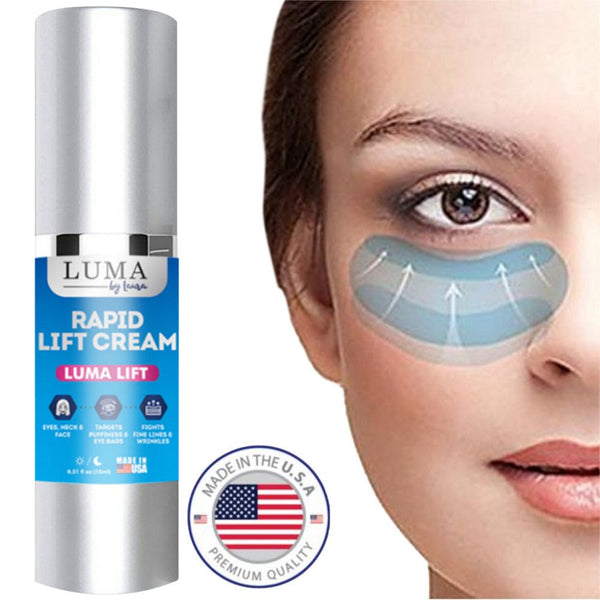
Luma by Laura doesn't sell under-eye patches. If you use them, Luma Lift eye cream can go on afterward. It's a lightweight, clear gel that goes on top of your regular eye cream or moisturizer. As it dries, you'll feel it tighten, a temporary effect that helps the area look smoother and more rested. Per its product page, it contains sodium hyaluronate for hydration, three peptides and acai, perilla and white oak bark extracts. It doesn't contain caffeine.
A simple order: patches off, pat in the leftover serum, apply your eye cream, then tap a very small amount of Luma Lift on top with your ring finger. Patch test first and keep it out of your eyes. You'll find it with our other eye products in eye care. Individual results vary.
FAQ
What is the best eye mask for puffy eyes?
There isn't one best patch for everyone. A cool gel patch made for the eye area, without fragrance if your skin is sensitive, is a good start. In one trial, plain cool gel worked about as well as gel with caffeine.
How long should you leave under-eye patches on?
Follow the time on the package. Leaving them on longer, such as overnight, isn't better unless the directions say so, and it gives the serum more time to irritate thin skin.
Can you use under-eye patches every day?
Yes, if your skin is fine with them and the package doesn't say otherwise. Patch test first, and stop if you notice redness, itching, burning or swelling.
Do caffeine eye patches work better than regular ones?
Not clearly. In a 34-person trial, a 3% caffeine gel didn't reduce puffy eyes significantly more than the same gel without caffeine. Some people did respond better to the caffeine.
Do eye patches help dark circles?
Maybe a little. In one small study, a caffeine and vitamin K pad lightened dark circles over four weeks, but only 11 women took part. Patches won't change shadows caused by the shape of the area under your eyes.
Can you reuse under-eye patches?
Most aren't made to be reused, so check the package. Once a patch has been on your skin, it's best to throw it away.
Luma by Laura makes and sells Luma Lift, the eye cream mentioned in this article.
This article is for general information about skin care and cosmetics. It is not medical advice. If you have a skin condition or concerns about a product or ingredient, talk to a doctor or dermatologist.
Michael GonzalesWrites about skin care and beauty for Luma by Laura. About Michael