Luma beauty guide
Crow's Feet: What Causes Them and What Skincare Can Do


What causes crow's feet? Crow's feet are the fine lines that fan out from the outer corners of your eyes. They form when the small muscles there contract every time you smile, laugh or squint. Over the years, sun exposure and the natural loss of collagen and elastin make those lines show even when your face is relaxed.
They're harmless, and almost everyone gets them. Skincare can't stop you from smiling, but daily sunscreen, sunglasses and a good moisturizing eye cream such as Luma Lift can help with how they look. Below: what causes them, when they start, what an eye cream can and can't do, and the habits that matter most.
What are crow's feet?
Crow's feet are the lines at the outer corners of your eyes. Doctors call them lateral canthal lines, and many people call them laugh lines (Cleveland Clinic). At first you only see them when you smile or squint. Later, they stay visible when your face is at rest.
They form here partly because the skin is so thin. In one study of 452 skin samples from 28 places on the body, eyelid skin was among the thinnest, about 0.5 to 0.6 mm thick, compared with about 2 mm on the back (Lee and Hwang, 2002). Thin skin that folds every time you smile shows lines early.
What causes crow's feet?
Cleveland Clinic and the American Academy of Dermatology (AAD) point to a handful of causes:
- Facial expressions. Every smile, laugh and squint folds the skin at the corners of your eyes. The AAD explains that when the same muscles contract over many years, the lines become set.
- Sun exposure. The sun's rays make skin age faster. There's so much evidence for this that dermatologists have a word for it: photoaging (AAD).
- Squinting in bright light. Without sunglasses, you squint more, and that adds more folding in the same spot.
- Age. Your skin makes less collagen and elastin over time, so it bounces back less easily (Cleveland Clinic). Skin also gets drier with age, which is when fine lines start to show (AAD).
- Smoking. The AAD says smoking greatly speeds up skin aging.
- Genetics. Some people simply get them earlier or deeper than others (Cleveland Clinic).
At what age do crow's feet start?
Most people first notice crow's feet in their 30s, sometimes in their 40s (Cleveland Clinic). Seeing faint lines in your 20s is common too, especially if you spend a lot of time outdoors or squint often. Cleveland Clinic also notes that researchers found crow's feet tend to appear earlier and deeper in men, possibly because men are less likely to wear sunglasses and sunscreen.
Can you prevent crow's feet?
You can't stop them completely, and you wouldn't want to stop smiling. But you can slow down how quickly they set in. These are the habits dermatologists come back to again and again:
| What you can do | Why it helps |
|---|---|
| Wear broad-spectrum sunscreen, SPF 30 or higher, every day | The sun makes skin age faster (AAD). In a 4.5-year trial of 903 adults under 55, daily sunscreen users showed 24% less skin aging than people who used it when they felt like it (Hughes et al., 2013). |
| Reapply sunscreen about every two hours outdoors | Mayo Clinic recommends reapplying every two hours. |
| Wear UV-protective sunglasses | The AAD says sunglasses help reduce fine lines around the eyes, partly because you squint less (AAD, Cleveland Clinic). |
| Add a wide-brimmed hat and shade from 10 a.m. to 2 p.m. | Less direct sun, less squinting (AAD, Cleveland Clinic). |
| Moisturize every day, including around your eyes | Moisturizer traps water in the skin, which can help reduce the look of some fine lines (AAD). |
| Don't smoke | Smoking speeds up skin aging (AAD, Mayo Clinic). |
| Get enough sleep | The AAD lists sleep among the basics for skin in your 40s and 50s. |
For more everyday habits, see our tips to help prevent signs of aging.
Does eye cream help crow's feet?
It can help with how they look, within limits. Here's the honest version, based on what Mayo Clinic, the AAD and the FDA say about creams for lines:
- A moisturizing eye cream can soften the look of fine lines right away. Moisturizers temporarily plump the skin, so lines look less noticeable (Mayo Clinic). The AAD says a moisturizer can immediately plump up fine lines.
- Results are usually modest. Mayo Clinic says creams typically make only small improvements.
- They take time and steady use. Most products need at least six weeks, and sometimes three months, before you see a difference (AAD).
- The effect lasts only while you use it. Mayo Clinic notes that skin will likely go back to how it looked once you stop.
- Price doesn't tell you how well it works (AAD, Mayo Clinic).
The FDA draws the line clearly: a product that makes lines less noticeable by moisturizing the skin is a cosmetic. A product meant to remove wrinkles or increase your skin's collagen is a drug or a medical device. So a cosmetic eye cream is about the look of crow's feet, not getting rid of them.
When you compare eye creams, look for hydrators such as hyaluronic acid (or sodium hyaluronate) and a texture you'll actually use twice a day. Some formulas also include peptides, which Cleveland Clinic lists among the over-the-counter options. Our skincare ingredient notes explain what's in our formulas, and our guide to using hyaluronic acid shows where it goes in your routine.
How do you apply eye cream to crow's feet?
- Start with clean skin. Wash gently and pat dry (AAD).
- Use your ring finger. The AAD recommends it for any cream around your eyes because it's the weakest finger and won't pull on the delicate skin.
- Tap, don't rub. Dot a small amount along the outer corner of each eye and tap it in gently.
- Keep it out of your eyes. Stay away from the lash line.
- Follow with sunscreen in the morning. This is the step that protects tomorrow's skin.
Trying a new product? The AAD suggests testing it on your inner forearm twice a day for four or five days first, and stopping anything that stings or burns. Our guide to trying new skin care products walks through it.
What do dermatologists offer for deeper crow's feet?
If lines bother you more than skincare can address, a board-certified dermatologist can talk you through in-office options. Cleveland Clinic and Mayo Clinic list prescription retinoid creams, botulinum toxin injections, chemical peels and laser resurfacing. Each comes with its own costs, downtime and possible side effects, so it's a conversation to have with a doctor, not a decision to make from a search result.
Where does Luma Lift fit?
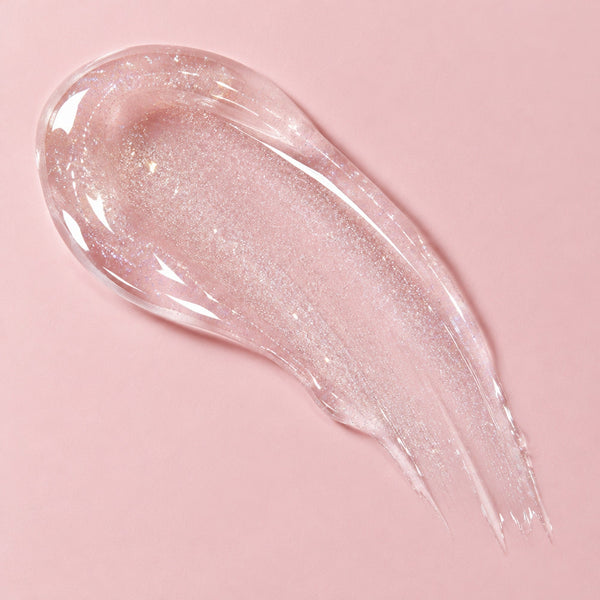
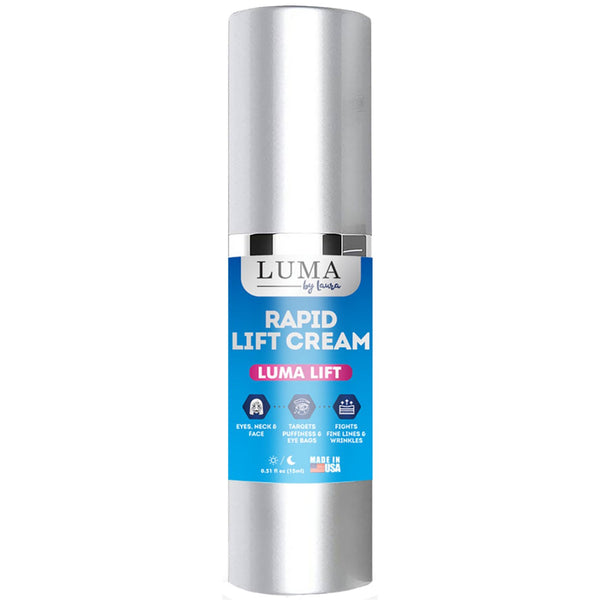
Luma Lift is made for the skin around your eyes, crow's feet included. It's a lightweight eye cream with sodium hyaluronate for hydration, a blend of peptides (acetyl hexapeptide-8, acetyl octapeptide-3 and palmitoyl tripeptide-1), and plant extracts including acai, perilla and white oak bark. As it dries, it creates a temporary tightening feel that helps smooth the look of fine lines and crow's feet.
Here's how to use it:
- Apply your usual eye cream or moisturizer first.
- Tap a very small amount of Luma Lift on top with your ring finger. Don't rub.
- Let it dry. You'll feel a tightening effect as it does.
- Wear sunscreen and sunglasses during the day. Luma Lift is a cosmetic, so it works on the look of your skin. The effect is temporary, and individual results vary.
Luma Lift is $49.00 for 0.5 oz (as of Oct 30, 2026). For step-by-step photos, see how to apply Luma Lift. If your lines are mostly below your eyes rather than at the corners, our under-eye wrinkles guide covers that area.
FAQ
Are crow's feet the same as laugh lines?
Yes. Cleveland Clinic says crow's feet are also known as laugh lines, because smiling and laughing are a big part of what forms them.
Can you get rid of crow's feet without Botox?
Skincare can soften how they look but won't make them disappear. Daily sunscreen, sunglasses and a moisturizing eye cream are the at-home basics. For deeper lines, a dermatologist can explain options such as prescription retinoids, peels or laser.
What is the best eye cream for crow's feet?
Look for one that hydrates (hyaluronic acid or sodium hyaluronate), feels comfortable enough to use twice a day, and doesn't sting. Pricier isn't automatically better, according to the AAD and Mayo Clinic.
How long does it take eye cream to work on crow's feet?
A moisturizing cream can make fine lines look softer right away. For longer-term changes, the AAD says most products need at least six weeks, sometimes three months, of regular use.
Are crow's feet harmful?
No. Cleveland Clinic notes crow's feet are harmless and a normal part of aging. They also show a lifetime of smiling.
Do men get crow's feet earlier than women?
Researchers have found crow's feet tend to appear earlier and deeper in men, possibly because men use sunglasses and sunscreen less often (Cleveland Clinic).
Luma by Laura makes and sells Luma Lift, the eye cream mentioned in this article.
Sources: Cleveland Clinic, "Crow's Feet (Lateral Canthal Lines)"; American Academy of Dermatology, "11 ways to reduce premature skin aging"; American Academy of Dermatology, "Skin care in your 40s and 50s"; American Academy of Dermatology, "Wrinkle remedies"; American Academy of Dermatology, "Should I apply my skin care products in a certain order?"; Mayo Clinic Staff, "Wrinkle creams: Your guide to younger looking skin"; U.S. Food and Drug Administration, "Wrinkle Treatments and Other Anti-aging Products"; Hughes et al., "Sunscreen and prevention of skin aging: a randomized trial." Annals of Internal Medicine 2013;158:781-790; Lee et al., "Skin thickness of Korean adults." Surgical and Radiologic Anatomy 2002;24:183-189.
This article is for general information about skin care and cosmetics. It is not medical advice. If you have a skin condition or concerns about a product or ingredient, talk to a doctor or dermatologist.
Michael GonzalesWrites about skin care and beauty for Luma by Laura. About Michael